
White Rose Forest
Strategic Plan
(2025-50)
Creating a resilient Landscape for Growth
The White Rose Forest Strategic Plan (2025-50) is the long-term strategic document governing development of the White Rose Forest, setting out the vision, aspirations and targets for tree and woodland establishment and management in North and West Yorkshire. As such, it provides the overarching tree and woodland strategy for North and West Yorkshire. It will be delivered through a series of five-year Action Plans, which will provide more detail on funding, delivery programmes, actions and interim targets for that period of the Strategic Plan.
Our Targets for 2050
Our Vision for 2050
The White Rose Forest partnership is leading landscape transformation in North and West Yorkshire, creating a vast and varied treescape that connects and permeates our towns/cities and countryside. Our work has made our region more prosperous and resilient to a changing climate, improved health & wellbeing and supported nature recovery.
Our Partnership
The White Rose Forest is the Community Forest for North and West Yorkshire. A partnership of local and combined authorities, national park authorities and national landscape organisations, Department for Environment, Food & Rural Affairs (Defra) organisations, alongside national, regional and local charities, businesses and community enterprises.
%
Tree and woodland cover
%
Of woodland sustainably managed
%
Of households living close to accessible woodland
People engaged in the work of the White Rose Forest per year
%
Of total funding from non-public sector sources
The White Rose Forest as a Place
The White Rose Forest is at the heart of the northern Community Forests and the Northern Forest programme.
The White Rose Forest covers a vast and varied area of northern England, ranging from major cities to sparsely populated uplands. The diverse landscape, economic, environmental, demographic and social factors below all impact on tree and woodland establishment and management, influencing priorities, benefits, constraints and engagement (statistics provided are the current or most recently available at the time of production). This Strategic Plan recognises and reflects this context.


Nature
24%
Yorkshire Species of Concern favour woodland habitats
- The State of Yorkshire’s Nature (2024) report confirmed that Yorkshire’s wildlife is under threat, with species continuing to decline and biodiversity diminishing.

Trees and Woodland
12%
Current tree and woodland cover (England = 14.9%)
- This is made up of 8.6% Woodland and 3.4% Trees Outside Woodland.
- The Forestry Commission Sensitivity Maps for Woodland Creation indicate that approximately 14% of the White Rose Forest area (England = 22%) has low sensitivity to new woodland creation (i.e. does not have any clear constraints to address on the basis of national datasets, and it should be easier to agree creating new woodland here than in other areas).
- The Forestry Commission has assessed that almost 62% of all woodland in the White Rose Forest area (England = 57%) is sustainably managed.
- Natural Capital analysis undertaken by Liverpool John Moores University for England’s Community Forests has assessed that 25% of households in the White Rose Forest area have an area of accessible woodland over 0.1ha in size within 500m.

Population
3.2 Million residents
The White Rose Forest area population.
- This is a population density of 310 per square kilometre (England = 434 residents per square kilometre).
- However, population density varies considerably across the local authority areas in the White Rose Forest, from 77 residents per square kilometre in North Yorkshire to 1,500 residents per square kilometre in Bradford.
- The Index of Multiple Deprivation measures relative levels of deprivation in small areas (with an average population of 1,500), called Lower-layer Super Output Areas (LSOAs), in England.
314 (17%) LSOAs in the White Rose Forest area fall into the 10% most deprived areas of England. - However, levels of deprivation vary considerably across the Local Authority areas in the White Rose Forest, from 1 (1%) LSOA in York to 104 (34%) LSOAs in Bradford falling into the 10% most deprived areas of England.

Economy
124,000
Number of active businesses in the White Rose Forest area.
- The Gross Domestic Product (GDP) in the White Rose Forest area was worth an estimated £103 billion, approximately £32,000 per head.

Land
10,300 Sq km
White Rose Forest area. (Approx 8% of England)
- 88% of this land area is classified as Rural and 12% as Urban.
- 72% of this land area is Agricultural land.
- 37% of this land area is covered by Protected Landscapes (all or part of 3 National Parks and 4 National Landscapes).

Click to expand
Partnership
At the heart of delivery of this Strategic Plan is the collaborative commitment and power of the White Rose Forest partnership, made up of Department for Environment, Food & Rural Affairs (Defra) organisations, local and combined authorities, national park authorities and national landscape organisations, alongside national, regional and local charities, businesses and community enterprises.
The White Rose Forest Strategic Plan (2025-50) will be the framework for the development of the White Rose Forest and its contribution to the network of England’s Community Forests. The White Rose Forest partnership recognises the founding Community Forest principle of a long-term aspirational goal of 30% tree cover and will strive to achieve this in core forest areas within the White Rose Forest, where these are identified and supported by partners.
Strategic Board
The White Rose Forest Strategic Board provides strategic ownership and direction to the ongoing establishment of the White Rose Forest across North and West Yorkshire through the development and delivery of the long-term Strategic Plan and associated 5 yearly Action Plans.


Our Vision for 2050
The White Rose Forest partnership is leading landscape transformation in North and West Yorkshire, creating a vast and varied treescape that connects and permeates our towns/cities and countryside. Our work has made our region more prosperous and resilient to a changing climate, improved health & wellbeing and supported nature recovery.
Tree and woodland cover is significantly greater, interconnecting with other habitats and land uses. Urban trees, trees in hedgerows, verges and along riverbanks, fruit trees and orchards, agroforestry, and conventional woodland, connect as an extensive network of wooded habitats.
Ancient woodlands and long-established woodland and ancient and veteran trees are recognised, valued, protected and restored as irreplaceable assets. These precious resources and the soils from which they grow form the foundations of this network of wooded habitats, facilitating nature recovery and supporting the wider ecosystem which depends on trees and woodland. Tree planting, woodland creation and natural regeneration has buffered, extended and connected fragmented habitats to grow this extensive network.
Communities have widespread and equitable access to high quality trees and woodland, as part of wider blue and green infrastructure, improving public health and reducing health inequalities. There is increased public involvement with the planning, designing, planting and management of trees and woodland, increasing connection to nature.


Tree-lined streets, leafy active travel routes and green transport corridors link our rural and urban communities to places of education, work and leisure, providing more attractive and healthier places to visit, live and invest in. Trees are recognised and cared for as a vital part of urban infrastructure.
Trees are an integral part of catchment management, helping to restore the condition of rivers and aquatic habitats and ‘slow the flow’, protecting the communities and businesses downstream.
Existing wooded habitats are increasingly sustainably managed, improving ecological condition and becoming more diverse in age, structure and species, and more resilient to pests, disease and the impacts of climate change.
The White Rose Forest is a place of innovation and learning, with a strong and financially sustainable partnership at its heart, driving its development and delivery. The forestry sector in the region has grown and strengthened, creating and securing green jobs.
Strategic Objectives and Targets for 2050
To bring about the vision, the White Rose Forest partnership will focus on five broad strategic objectives over the period of this 25 year Strategic Plan.
1.
Expand the area of trees and woodland and improve connectivity
Encourage and support the appropriate establishment (right tree, right place, right reason) of a range of new trees and woodland types in priority areas (e.g. more deprived areas, priority catchments and ancient woodland buffers) to extend the network of wooded habitats, recognising where sensitivities exist and integrating with other land uses (e.g. farming).
- A base target, to increase tree and woodland cover from
12% to 16.5% by 2050, to match the statutory national target. This will increase the area of trees and woodland by about 46,000 hectares, or about 92,000,000 trees. - With a stretch target, to increase tree and woodland cover from 12% to 18.5% by 2050, if the ambition in all local authority areas is met.
- This will increase the area of trees and woodland by about 67,000 hectares, or about 134,000,000 trees.

2.
Protect and restore more trees and woodland
Safeguard the future of ancient and long-established woodland and ancient and veteran trees. Encourage and support the sensitive and sustainable management of under-managed woodlands, improving ecological condition and resilience to the threats of pests and disease and a changing climate; extending and maximising the multiple benefits provided by existing trees and woodland.
- Increase the percentage of sustainably managed woodland from 62% to 70% by 2050.
- Increase the percentage of sustainably managed ancient woodland from 72% to 90% by 2050.
- This will bring a total of 7,250 hectares of additional woodland into sustainable management.

3.
Engage more people, communities and businesses in the planning, designing, planting, management and use of trees and woodland
Create opportunities for people to get involved in the work of the White Rose Forest partnership and improve equitable access to high quality trees and woodland increasing their use (for play, learning, recreation and leisure), deepening people’s relationship with the natural environment and improving health and wellbeing.
- Increase the number of people directly engaged in the core work of the White Rose Forest partnership in a substantive way (tree planting, woodland management and other activities) from 8,000 to 16,000 per year by 2050.
- Increase the percentage of households with an area of accessible woodland over 0.1ha in size within 500m from
25% to 50% by 2050. - This will increase the number of households living close to accessible woodland by about 300,000.

4.
Promote the transformative role of trees and woodland
Champion trees and woodland (and the White Rose Forest) locally, regionally and nationally, for the role they can play in achieving a prosperous economy, sustainable environment and thriving communities, to ensure they are supported and resourced at the required level.
- Each Local Authority area has a current, resourced and effective trees and woodland strategy (in line with the White Rose Forest Strategic Plan) by 2050.
- Local Planning policies support the White Rose Forest and are securing meaningful developer investment into the delivery of the White Rose Forest Strategic Plan by 2050.

5.
Grow the impact and sustainability of the White Rose Forest partnership
Lead research, innovation, knowledge sharing, skills and capacity development and delivery across the forestry sector in North and West Yorkshire through a strong and effective White Rose Forest partnership. Increase private sector engagement and investment in the White Rose Forest.
- Increase the number of people directly engaged in the core work of the White Rose Forest partnership in a substantive way (tree planting, woodland management and other activities) from 8,000 to 16,000 per year by 2050.

District Priorities and Targets
The White Rose Forest Strategic Plan (2025–50) provides the overarching tree and woodland strategy for North and West Yorkshire. However, given the vast and varied nature of the White Rose Forest area, there will be differences in priorities across the area.
The following local priorities and tree and woodland cover targets for 2050 have been developed for each Local Authority area.
Note: Tree and woodland cover baseline and target figures are based on the Forest Research National Forestry Inventory Woodland and Trees Outside Woodland datasets, as this is how the national baseline and statutory target for England are measured. Other datasets may be used at a local level, giving differing figures, but with the same overall level of aspiration.
Approach
The White Rose Forest partnership will work collectively to deliver against the strategic objectives in this Strategic Plan. We will support a multi-disciplinary design-led approach to tree and woodland establishment and management through the adoption of the White Rose Forest Delivery Pathway, to produce a range of benefits for the landscape, wildlife and communities.
Landowners and managers across North and West Yorkshire will be offered guidance, support and professional expertise to help them navigate the planning, design, approval, funding, planting and management of trees and woodland. The start point for any engagement will be understanding landowner or manager objectives, with the approach aiming to empower informed decision making.
To support landowner engagement the White Rose Forest partnership will identify broad thematic priority areas (initially Green Streets®, Landscapes for Water and Nature Recovery) across North and West Yorkshire where trees and woodland could provide the most benefit and maximise the overall return on investment, but will remain open to proposals from all areas. We will also recognise more detailed local opportunity mapping undertaken by partners. This approach will target landowner engagement and design tree and woodland establishment to protect important species and habitats and support continued agricultural productivity.
Principles
The White Rose Forest partnership will employ these principles to underpin its approach to delivering this Strategic Plan. They are intended to provide high-level guidance to the individuals and organisations working across the partnership.

Prioritisation
- Act with urgency, but considering a long-term horizon, maximising the benefits of trees and woodland for future generations.
- Focus tree and woodland establishment and management in areas of greatest need and benefit, making best use of resources.
Collaboration
- Share data and research to build knowledge across the partnership, enabling an evidence-based approach to shape and develop future priorities and plans.
- Focus on the collective aims and utilise the skills, experience and resources of the partnership optimally, ensuring the whole is greater than the sum of the parts.
Engagement
- Involve the public, communities, businesses etc in the work of the partnership, building the network of stakeholders and increasing their connection with trees and woodland.
- Seek input from stakeholders on design and delivery of schemes and development of the partnership, integrating concerns and aspirations into decision making.
Innovation
- Be landowner led, engaging early and tailoring schemes and support to their circumstances, needs and land, retaining flexibility within an overall approach.
- Embrace new approaches and seek opportunities for continued improvement, providing leadership within the sector and across the community forest network.
Professionalism
- Respect the historical significance of trees and woodland and their place in the local landscape, recognising where sensitivities exist with other habitats and where opportunities exist to integrate with other land uses.
- Ensure tree and woodland establishment and management is undertaken in line with best practice principles (UK Forestry Standard), adopting sustainable forest management.
Programmes
The work of the White Rose Forest partnership will be structured around a number of strategic programmes. The partnership will work with stakeholders to design and deliver these programmes in the context of the long-term vision and strategic objectives.
Green Streets®
Current Programme
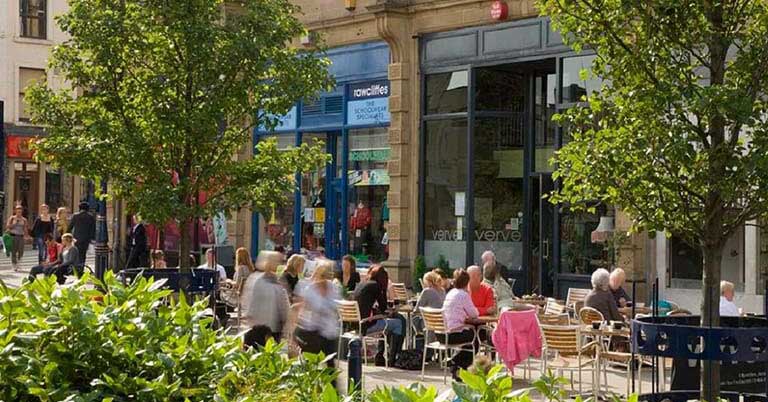
The Green Streets® programme focuses on urban tree planting and management and aims to improve air quality, make our urban spaces more attractive for businesses and investment, and encourage the uptake of active travel, linking areas of deprivation to education / employment sites.
Landscapes for Water
Current Programme
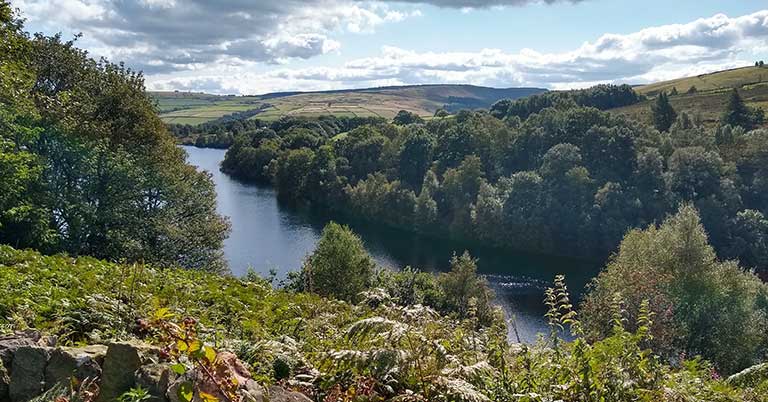
The Landscapes for Water programme provides a strategic approach to natural flood management in North and West Yorkshire and focuses on the creation of new woodland in river valleys or catchments to help reduce flood risk for communities and businesses further downstream.

Restore
Developing Programme
The Restore programme will build on the recent successful delivery of tree planting and woodland creation in the White Rose Forest, by taking a similar approach to woodland management. The programme will, encourage and support sustainable management of under-managed trees and woodlands, with a focus on Ancient Woodland (including Plantations on Ancient Woodland Sites), Ancient and Veteran trees and trees and woodlands near to where people live.
Collective Action
To achieve the ambition of this Strategic Plan, collective action will be required by the full range of stakeholders, as each have different and complementary roles to play.
Local Authorities
- Champion the White Rose Forest, establishing local priorities
- Produce, maintain and resource a tree and woodland strategy, aligned with this Strategic Plan
- Embed this Strategic Plan into all relevant policies/ strategies/ plans
- Work with the White Rose Forest partnership to identify opportunities for additional funding
- Integrate trees and woodland into transport / infrastructure / regeneration projects
- Ensure plans are in place for the sustainable management of your existing woodland
- Enforce National Planning Policy Framework and Local Planning statements
- Work with the White Rose Forest core team on engagement with other landowners and managers
- Support collaborative working through the White Rose Forest partnership by sharing best practice and developing common guidance and policies
National Park Authorities and National Landscape Organisations
- Champion the White Rose Forest, establishing local priorities
- Produce, maintain and resource a tree and woodland strategy, aligned with this Strategic Plan
- Embed this Strategic Plan into all relevant policies/ strategies/ plans
- Work with the White Rose Forest partnership to identify opportunities for additional funding
- Enforce National Planning Policy Framework and Local Planning statements
- Work with the White Rose Forest core team on engagement with other landowners and managers
- Support collaborative working through the White Rose Forest partnership by sharing best practice and developing common guidance and policies
Combined Authorities
- Champion the White Rose Forest
- Embed this Strategic Plan into all relevant policies/strategies/plans
- Integrate trees and woodland into transport / infrastructure / regeneration projects
- Work with the White Rose Forest partnership to identify opportunities for additional funding
- Influence central government policy and funding to support the White Rose Forest
Central Government
- Provide a consistent long-term funding programme(s)
- Champion the benefits and contribution of trees and woodland across government
- Recognise and support Community Forests as national delivery partners
- Support the delivery of this Strategic Plan through the work of arms-length bodies (e.g. Environment Agency, Forestry Commission, Natural England)
Environmental Non-governmental Organisations (NGOs)
- Champion the White Rose Forest
- Consider opportunities to introduce more trees and woodland on your land and work with the White Rose Forest core team on engagement with other landowners and managers
- Ensure plans are in place for the sustainable management of your existing woodland and promote this to other landowners and managers
- Support collaborative working through the White Rose Forest partnership by sharing best practice and developing common guidance and policies
Landowners and Managers
- Consider opportunities to introduce more trees and woodland on your land
- Ensure plans are in place for the sustainable management of your existing woodland
- Contact the White Rose Forest partnership for guidance, support and professional expertise to help you navigate the design, planning, planting and management of trees and woodland
Developers
- Integrate existing trees into new developments, wherever possible, and protect these during works on site
- Contribute to the expansion of the White Rose Forest by incorporating additional tree planting / woodland creation and associated landscaping within scheme designs
Contractors and Suppliers
- Develop capacity, skills etc to grow the forestry sector in North and West Yorkshire and support the delivery of this Strategic Plan
- Support collaborative working through the White Rose Forest partnership by sharing experiences and best practice
Businesses
- Promote opportunities for your staff to get involved in volunteering
- Donate to the White Rose Forest to support local tree and woodland projects
- Investigate opportunities to incorporate tree planting where you operate
Investors and Investment Advisers
- Create new green finance mechanisms, tailored to tree and woodland establishment and management, to meet different investor objectives
- Engage with the White Rose Forest partnership to design and pilot innovative approaches
- Scale up successful pilots into significant schemes / programmes
Academics and Researchers
- Engage with the White Rose Forest partnership on research projects, dissertations and placements
- Support collaborative working through the White Rose Forest partnership by undertaking research into issues or opportunities in the White Rose Forest and sharing research findings
Public and Third Sector Organisations
- Promote opportunities for your staff to get involved in volunteering
- Investigate opportunities to incorporate tree planting where you operate
- Explore opportunities to connect trees and woodland with your aims and objectives (e.g. health & wellbeing, conservation, climate, place, engagement etc)
Local People
- Express support for the White Rose Forest to local business and political leaders
- Seek opportunities to volunteer and promote a tree and woodland culture
- Engage in plans for local tree planting, woodland creation and management
- Consider planting a tree, if you have an appropriate space
- Explore and enjoy your local woods more often
Funding and Financing
The delivery of this Strategic Plan will require significant funding,
to deliver the benefits for business, the environment, nature and communities. The availability of different sources of funding and financing will also influence landowner and manager decisions regarding the establishment and management of trees and woodland.
Defra’s Trees for Climate programme has provided significant funding for all Community Forests since its launch in 2020 and has been the predominant source of capital and revenue funding for the White Rose Forest over the last five years.

This has enabled the establishment of significant amounts of new trees and woodland and the development of a core team, at the heart of the partnership, providing significant project delivery and specialist capacity and expertise.
In recognition of the continued pressures on central government funding and the expansion of new funding schemes and financing opportunities, funding the delivery of this Strategic Plan will necessarily become more blended and complex over time, drawing on public, private and charitable sources, with a growing proportion from non-public sector sources.
Some of the main options are:
- Dedicated trees and woodland planning, establishment or management grants
- Broader land management schemes, making payments for environmental goods and services
- Other grant funding, such as the National Lottery Heritage Fund
- Private investment through green finance mechanisms
- Funding through the planning system, as part of development
- Natural capital / Ecosystem services payments
- Devolved government investment funding to Combined Authorities
- Productive forestry
Corporate sponsorship, donations etc - Personal and charitable donations
Looking forward, the partnership will take a proactive approach to securing funding, exploring and developing a broad range of options and will do so in a co-ordinated manner to optimise outcomes.
Monitoring and Evaluation
The White Rose Forest Strategic Plan (2025-50) will be delivered through a series of five-year Action Plans, which will provide more detail on funding, delivery programmes, actions and interim targets for that period of the Strategic Plan. These Action Plans will be developed by the White Rose Forest partnership and approved
by the White Rose Forest Strategic Board.

It is envisaged that these Action Plans will be subject to light-touch review annually (with the potential addition, removal and refinement of individual actions) and re-approval by the White Rose Forest Strategic Board if needed, and more significant review after year 3 or 4 leading to the production of a new Action Plan.
Monitoring and evaluation will be essential to understand delivery against the aims, objectives and targets in the White Rose Forest Strategic Plan (2025-50) and five-year Action Plans and demonstrate the difference that the White Rose Forest makes. It also supports future planning, development and directing of resources and provides evidence for advocacy and funding bids.
The White Rose Forest core team will maintain a Geographical Information System (GIS) platform to map all White Rose Forest related tree and woodland establishment and management activity across North and West Yorkshire and systems to monitor and report on progress in delivering the current Action Plan. Partners will need to be open with the sharing of data and progress to enable a holistic collective picture across the White Rose Forest to be established.
The White Rose Forest partnership will report on progress in delivering the current Action Plan to its Programme Management Group and Strategic Board, and report through the England’s Community Forests network to the Department for Environment, Food & Rural Affairs. An annual progress and impact report, highlighting what has been achieved, will be published.
Final words
Over the last 25 years the White Rose Forest has successfully delivered a range of significant, and in some case ground-breaking, projects and programmes across North and West Yorkshire. With each year that passes the trees that have been planted grow and increase their positive impact on the local landscape, communities and wildlife. With a strong record of achievement and growing confidence in our approach, the White Rose Forest Strategic Plan (2025-2050) lays out the path for further transformation to 2050, creating a resilient landscape for growth.
Iwan Downey
White Rose Forest Programme Director
Download the White Rose Forest Strategic Plan 2025-2050
With thanks to our Defra partners
The White Rose Forest partnership would like to thank the Department for Environment, Food & Rural Affairs (Defra) and its arms-length bodies for their support over the last 25 years and looks forward to working together to deliver this Strategic Plan over the next 25 years.
